
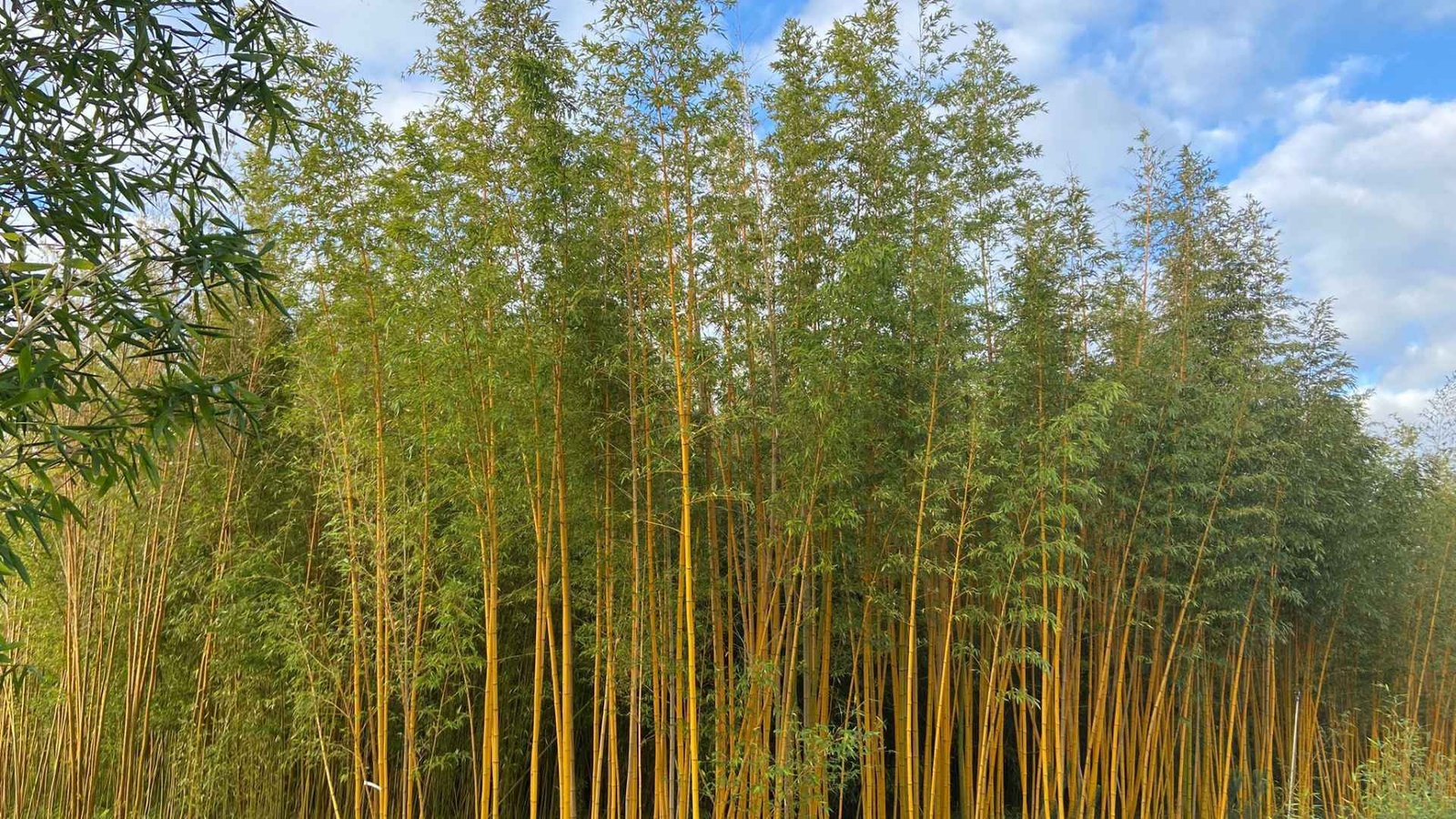
The Bamboo Invasiveness Myth: The facts about bamboo growth in Europe
As any new concept gains popularity, it’s only a matter of time before the skeptics and detractors come out of the woodwork to start casting their doubts. In the open marketplace of ideas, that can be a healthy process that we shouldn’t shy away from. Case in point: bamboo farming in Europe. Many environmentalists and sustainability advocates have embraced the idea, but the subject remains controversial, with its fair share of critics. Arguments against bamboo cultivation focus primarily on its non-native status in Europe and its reputation for being aggressive and invasive. While these points are well worth examining, they are hardly sufficient reasons for preventing commercial bamboo farming on the continent.
Exotic and Non-Native Species
For centuries, humans have been exploring the globe, discovering new species of flora and fauna, collecting them, and introducing them to new and foreign territories. The list of man-made catastrophes caused by this pioneering practice is long enough to fill an almanac, and should serve as a warning. Consider European rabbits in Australia, South American pampas grass in North America, or Texas mesquite trees introduced to Africa and Australia.
Any of these examples is enough to raise concern about inviting Asian bamboo to Europe. But keep in mind, for every environmental disaster spawned by an alien species, there’s another great success with a similar origin story, including the migration of corn, squash, and potatoes from the New World to Europe, or pineapples from Jamaica to Hawaii.
Therefore, we need to take a closer look before we categorically reject (or blindly accept) any species of Asian bamboo in Europe. What benefits, economic and otherwise, might this species bring to the continent? And what is the actual risk of an uncontrolled outbreak? Opinions on the economic potential of bamboo in Europe may vary, but at the European Bamboo Foundation, we feel confident that this renewable resource could form the basis of a multimillion-Euro industry, creating jobs while providing timber products and building materials, among countless other commodities. After all, the EU is the world’s largest importer of bamboo, according to INBAR, and even in the absence of a bamboo processing industry, the plant’s ability to sequester carbon cannot be denied.
So, let’s examine the real risks associated with importing these foreign species. In fact, gardening enthusiasts have been bringing bamboo into Europe for about 200 years, and these ornamental plants have yet to pose any serious threat. But will a large-scale plantation create more risk than a hobbyist’s collection or an ornamental nursery? To answer that, you need to understand how bamboo reproduces.
Propagation and Dissemination
The widespread, negative impacts of plants like mesquite in Africa and pampas grass in California are the direct result of their reproductive strategies and especially high success rates in the wild. These species not only survive well in foreign soil, where the climate is more or less similar. More importantly, or more dangerously, they can pollinate and go to seed. Carried on the wind, the seeds travel far and wide, and make their way into distant terrain, where they germinate and outperform native species, to the detriment of the local ecosystem. This is what defines an “invasive” species.
By contrast, bamboo seldom flowers, and, in fact, some species have never been known to flower. Furthermore, many bamboo species that do flower are still incapable of producing viable seeds. Ultimately, bamboo does not rely on seed dispersal to proliferate. So while it may be non-native, bamboo under proper management poses no real risk of turning invasive.
A more legitimate concern pertains to the vigorous rhizomes that many species of bamboo use to spread. But again, this risk is often overstated. Many ornamental species grown in Europe (genus Fargesia) have sympodial or clumping rhizome systems, meaning that they do not spread aggressively. But other species, including most of the bamboo varieties suitable for commercial cultivation in European climates (belonging to the genus Phyllostachys), have monopodial or running rhizomes. Planted in a compact residential setting, without appropriate measures for containment, running bamboo can become a genuine nuisance. It tends to expand rapidly and requires regular maintenance, as do many ornamental plants.
Commercial bamboo farming, on the other hand, actually presents less risk than a small plot planted by an amateur, as it’s subject to responsible plantation management practices. The most common and effective containment method for bamboo rhizomes on a larger plantation is to dig a barrier trench around the property. By inspecting the trench a couple of times a year, it’s easy to ensure that the bamboo is not going out of bounds. Moreover, on a spacious plantation, bamboo does not have the same tendency to stretch its boundaries in all directions, the way it does when it’s confined to a small garden. Finally, under reasonable management, with ongoing selective harvesting, new space regularly opens up within the grove, so that new shoots can sprout there rather than always running outward.
It should also be noted that bamboo is not known to attract any exotic pest species, nor is it unusually susceptible to exotic European or North American pests that do not occur in its native regions, both important considerations with non-native species.
Bamboo and Biodiversity
Another common concern with bamboo farming, and the cultivation of alien species in general, surrounds the question of biodiversity. According to the European Commission, monocultured maize covers about 8 million hectares of farmland in the E.U. Europe has broadly accepted this crop as an important source of silage for livestock and feedstock for bioenergy. Bamboo would appear to be at least as useful for construction material, producing significantly greater volumes of biomass per year without replanting.
While monocultured maize and other annual crops effectively remove all other species of plants and animals, bamboo is a perennial grass and is typically managed more like a silvicultural system, or forest. Unlike grainfields that get overrun two or three times a year by a tractor, the bamboo grove is far more likely to provide a continuous habitat for birds and small mammals. Timber bamboo naturally outcompetes and shades out most other plants because of its dense leaf canopy. In most cases, this eliminates the need for weed killers, which in turn leads to a healthier and more diverse soil biome.
Some farmers in the Netherlands, in at least one instance, planted a grove of bamboo seedlings, and then planted wildflowers all around it. The bamboo grows fine, while the wildflowers attract beneficial insects, simultaneously helping the ground to retain moisture by decreasing evapotranspiration. Intercropping is also possible between the bamboo rows while the rhizome system establishes itself. Shade-loving forest fruits are especially suitable, such as bilberries, lingonberries, raspberries, and wild strawberries.
Nonetheless, care must be taken to avoid farming bamboo on premium agricultural land better suited for food production. With its minimal nutrient needs, bamboo is most appropriate on degraded land and even grows well in heavily polluted soils contaminated by mining activities, for example.
Closing Thoughts
Kicking off a new bamboo farming industry in Europe is not without its challenges. Of course, every new industry has its risks and its difficulties. But the fact that bamboo is a fast-growing grass of predominantly Asian origin should not act as a deterrent. Its remarkable resilience and growth rate are exactly what make it attractive for commercial use. These properties should be celebrated and harnessed, and yes, they must be well understood, but not feared.
With basic containment practices and responsible site selection, commercial bamboo cultivation poses a manageable risk profile, especially when weighed against its potential to convert degraded land into a renewable source of timber, biomass, and jobs. The real question facing Europe isn’t whether bamboo can be grown responsibly, but whether the continent is willing to invest in the expertise and oversight to do so. At the European Bamboo Foundation, we believe that investment is worth making.
Fred Hornaday has been active in the bamboo industry since 2006. He is the founder of Bambu Batu and Editor-in-Chief at the European Bamboo Foundation.